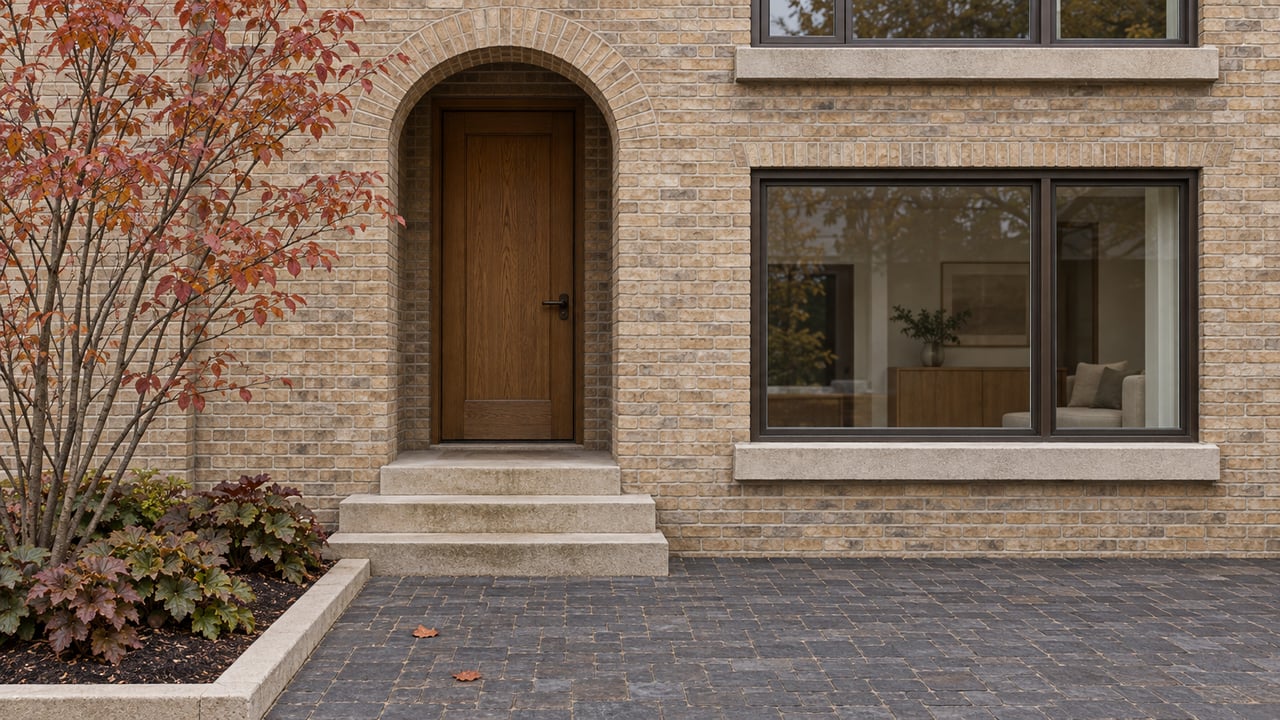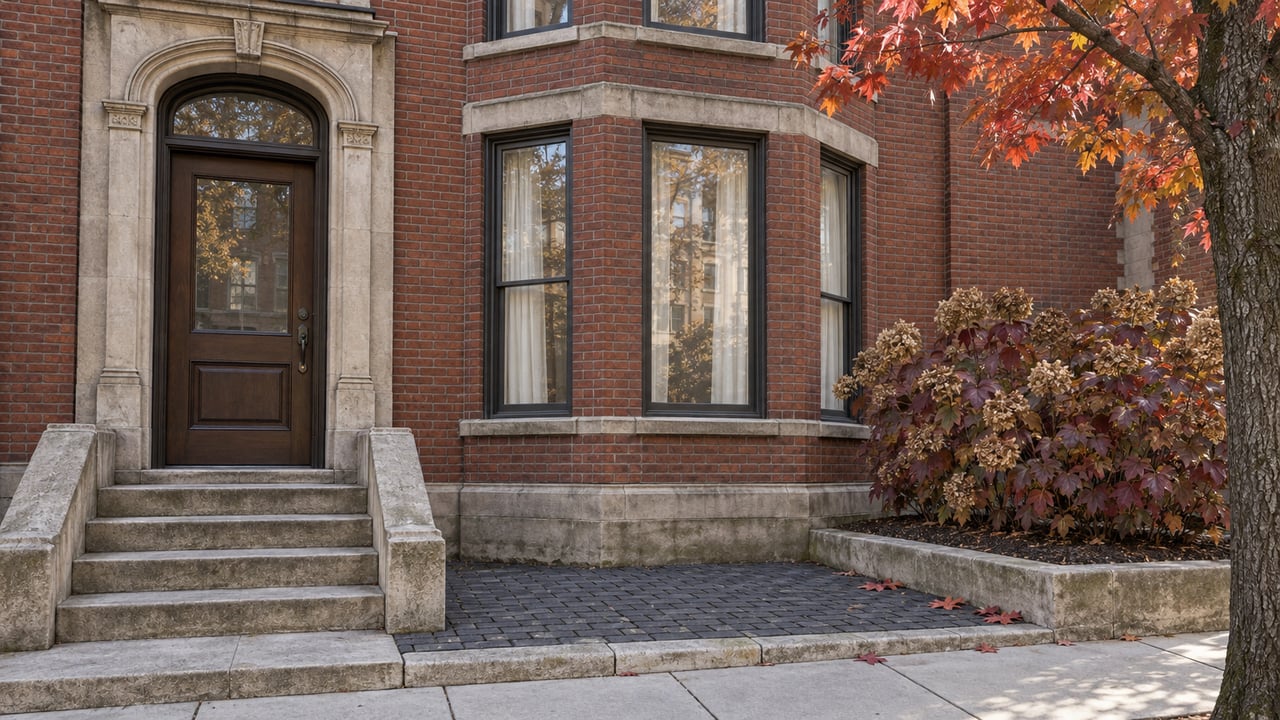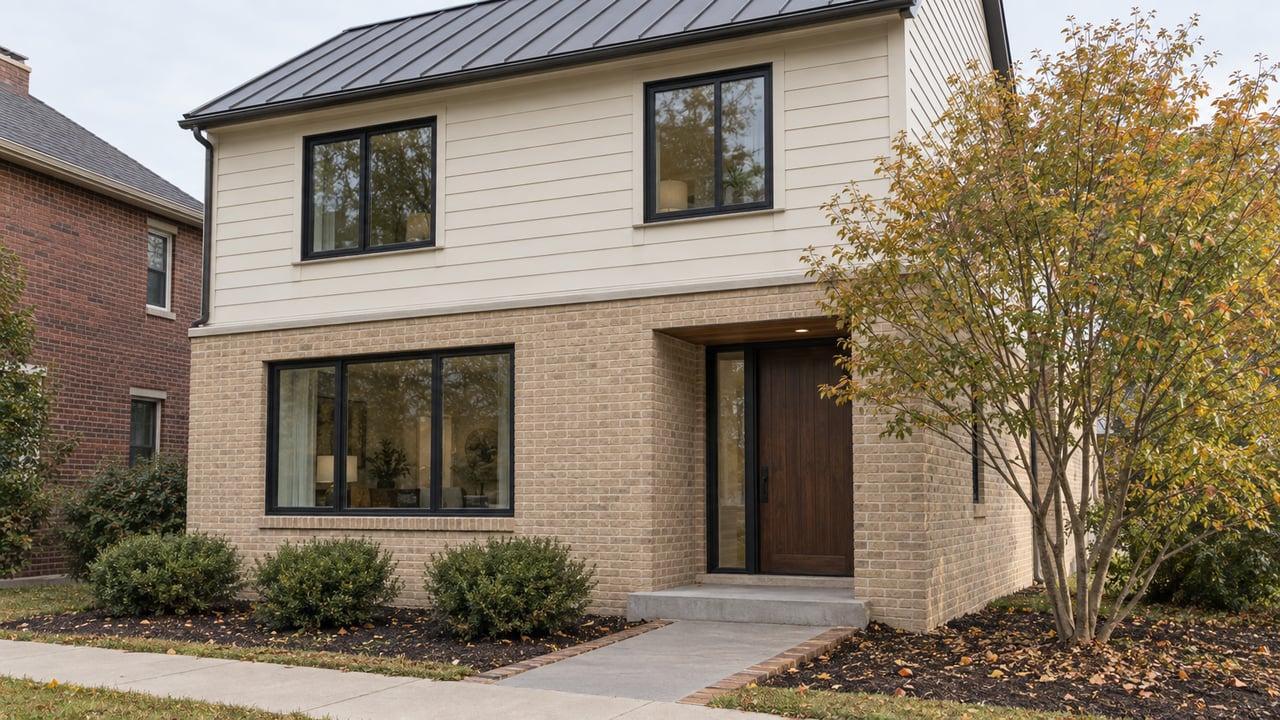
"You see a house being sold for $800,000, and being replaced by a duplex, two homes, for $1.8 million each." That's how one member of Neighbors for Neighborhoods, the group that sued to stop Arlington County's Missing Middle zoning ordinance, described what the policy has actually produced on the ground. It's a fair complaint about affordability. It's also, without meaning to, a precise explanation for why Arlington's housing market looks split in two right now, and why that split has less to do with what buyers want than with what a courtroom hasn't decided yet.
If you've been comparing Arlington to other close-in Virginia and Maryland markets, you've probably already seen a headline median price. What that number won't tell you is that Arlington's single-family homes and its condos have been moving in opposite directions for the better part of two years, and that the gap traces back to a zoning fight that is still, as of this fall, unresolved at the Virginia Supreme Court.
The Ordinance Attorneys Are Still Arguing About
According to Yimby Law, in March 2023, the Arlington County Board voted unanimously to approve what's formally called the Expanded Housing Options ordinance, allowing by-right construction of up to six units on lots that had been zoned exclusively for single-family homes. The goal was to chip away at a housing stock badly skewed toward two extremes: about 70 percent of Arlington's homes are mid- or high-rise multifamily condos and apartments, while single-family detached homes make up roughly a quarter of inventory but sit on most of the county's residential land. Duplexes, triplexes, and small multifamily buildings, the actual "missing middle," account for only about 6 percent, according to the county's own Housing Market Pressures Report.
The ordinance didn't survive its first legal test. A group of nine homeowners calling itself Neighbors for Neighborhoods sued, arguing the county passed the policy without proper process. In September 2024, an Arlington Circuit Court judge agreed, voiding the ordinance from its inception and freezing 45 in-progress multifamily projects along with the permits attached to them.
The county appealed. According to HousingWire, in June 2025, the Virginia Court of Appeals reversed course, ruling that the original lawsuit should never have proceeded because it failed to name the developers who had built under the ordinance as required parties. That reinstated the EHO ordinance and let permitting resume, though it settled a procedural question rather than the underlying one: whether the zoning change itself was lawful.
The fight isn't over. On May 19, 2026, the Virginia Supreme Court agreed to review that Court of Appeals ruling. Neighbors for Neighborhoods has said it expects the case to reach trial within three to six months, which puts a trial date somewhere in the range of this fall to early winter. In the meantime, the county has resumed processing EHO applications, and 38 permits that had been voided by the 2024 ruling have been reclassified as approved.
That is the timeline in short form:
- March 2023: County Board approves EHO by-right zoning for up to six units per lot
- September 2024: Circuit Court voids the ordinance, halting 45 projects
- June 2025: Court of Appeals reinstates it on procedural grounds
- May 19, 2026: Virginia Supreme Court agrees to take up the case
- Trial: expected within three to six months, per Neighbors for Neighborhoods
Anyone shopping in Arlington right now is buying into the middle of that timeline, not the end of it.
What the Average Home Price Doesn't Tell You
Arlington's blended average sale price, mixing every property type together, crossed $1 million for the first time in April 2026, hitting roughly $1.06 million. That headline number is doing a lot of work to obscure what's actually happening underneath it.
Single-family detached homes are pulling that average up. According to forecasts from the Northern Virginia Association of Realtors, Arlington's single-family prices are on track to rise about 3.8 percent in 2026, the second-strongest projected gain in Northern Virginia behind only Alexandria. Demand for a yard, more square footage, and access to established schools hasn't softened.
Condos are pulling the average down. Average condo sale prices fell roughly 7.4 percent over the course of 2025, bottoming out near $508,500 at one point, before recovering modestly to about $528,600 by April 2026. Only 39 percent of condos sold at or above asking price in 2025, a sign that buyers in that segment had real leverage for the first time in years. Rising HOA fees, aging building reserves, and competition from renting an equivalent unit all played a part.
Zoom out to the county level and the picture looks calmer than either extreme. Redfin's tracker put Arlington's median sale price at about $818,000 for the three months ending May 2026, up 2.3 percent year over year. That figure sits comfortably between the single-family and condo stories, which is exactly the problem with quoting it on its own. A county median calculated from a market this divided tells you almost nothing about what you'd actually pay for either kind of property.
A Zoning Status That Depends on Timing
Here's where the legal fight and the price data connect. The entire theory behind Missing Middle housing was to add supply in the gap between a $500,000 condo and a $1 million-plus single-family home, using duplexes, triplexes, and small multifamily buildings built on formerly single-family lots. That's the inventory category that's supposed to relieve pressure on both ends of the market. Instead, it's the category tied up in litigation.
Neighbors for Neighborhoods reports that the county has resumed accepting new EHO applications and reclassified 38 permits that had been voided by the 2024 ruling as approved while the case remains pending before the state's highest court.
The Supreme Court's current review is limited to the procedural question of whether the original lawsuit was structured correctly, not a ruling on whether the zoning itself is valid.
The Question Worth Asking Before You Sign
If you're evaluating a newly built duplex, triplex, or small multifamily property on what used to be a single-family lot in Arlington, the zoning history is worth understanding before you get to inspection and financing. A few practical distinctions matter here. It's also worth asking whether the specific permit involved was one of the 38 that were voided and later reclassified as approved, since that history is part of the property's paper trail even if it doesn't show up in a standard walkthrough.
Lenders and title companies are generally the ones who translate legal uncertainty into practical terms, through underwriting conditions, title exceptions, or simply additional questions during the process. The conversation with your lender and settlement agent should include the ordinance's litigation history as a specific topic, not an afterthought.
Why Some Blocks Are Already Pulling Away From the County Average
The single-family and condo split isn't evenly distributed across Arlington either, and that unevenness reinforces the same point. Lyon Village posted a 24.6 percent increase in average sold price over the course of 2025, one of the sharpest neighborhood-level moves anywhere in the county. Dominion Hills, Waverly Hills, and Woodmont also outperformed the countywide average that year. These are neighborhoods built out mostly with established single-family homes, the segment that's been appreciating steadily while EHO-eligible areas work through their zoning uncertainty.
That pattern is the practical takeaway for anyone comparing Arlington to a neighboring jurisdiction on price alone. The county's structural land constraint, limited developable space inside a jurisdiction already built out along its Metro corridors, means the policy meant to add mid-tier supply is also the policy still tied up in court. Until that resolves, expect the gap between Arlington's single-family and condo markets, and between its highest-performing blocks and its county average, to keep telling a more complicated story than any single median price can carry.
If you're weighing an Arlington purchase against another close-in market, or trying to figure out what a specific EHO-zoned property's history actually means for your financing and timeline, Ira Hersh has spent decades working cross-jurisdictionally across the DMV and can walk through what this particular legal moment means for your specific address.
This article is general information, not legal, tax or financial advice. Consult a qualified professional about your situation.